

Good landscaping work doesn’t fill a calendar by itself. Potential customers still need to find you, trust you and understand how to request a quote.
The most reliable marketing usually starts with work you already have: photograph completed projects, collect reviews, ask for referrals, offer suitable follow-up services and use quieter months to prepare for the next busy season.
TL;DR: Document every project, keep your Google Business Profile complete, build relationships with local referral partners, offer maintenance to existing customers and plan marketing work around the landscaping season.
1. Use project photos to win more landscaping work
Landscaping is visual. A clear before-and-after set shows the scale of the work and the quality of the result faster than a general claim about workmanship.
Photograph projects consistently, including smaller jobs that represent the work you want more of. A prospective lawn-care customer may learn more from a tidy maintenance project than from your largest garden redesign.
How to photograph landscaping projects
- Take photos before work begins, during key stages and after completion
- Use similar angles for before-and-after comparisons
- Photograph in good natural light when possible
- Show a range of services, garden sizes and budgets
- Get the customer’s permission before publishing images of their property
- Add a short description of the brief, work completed and general location
Turn the strongest projects into case studies on your website. If you are deciding where those case studies belong, the landscaping website pages guide covers the project gallery, service pages and quote page.
Share the same work on social media
Instagram and Facebook suit visual work, but you don’t need to post every day. Share one finished project or useful work-in-progress update each week. Include a short caption explaining what changed and tag the location when it is relevant.
Reply to questions and direct messages promptly. The post may attract attention, but a clear, timely response is what turns that attention into an enquiry.
Need a Website for Your Landscaping Business?
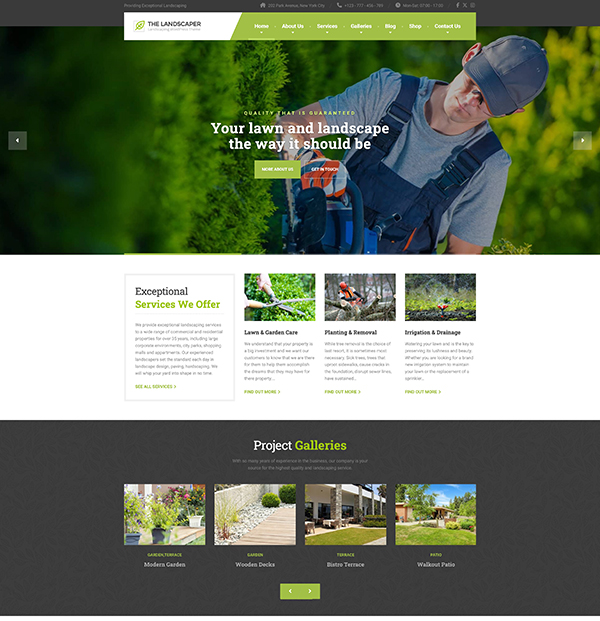
The Landscaper includes ready-made service pages, project galleries, and estimate forms—so you don’t have to start from scratch.
2. Help local customers find you on Google
A verified Google Business Profile can show your services, service area, phone number, opening hours, photos and customer reviews in Search and Maps. Keep every field accurate and use categories that match the work you provide.
Complete your Google Business Profile
- Choose the most accurate primary business category
- List the services you currently offer
- Set a realistic service area
- Keep contact details and opening hours current
- Upload recent project photos
- Ask customers for honest reviews and reply to them
Google says local results are mainly based on relevance, distance and prominence. Complete business information helps Google understand your services, while reviews and links can contribute to prominence. The guide on getting more landscaping reviews includes a practical request process.
Build a useful landscaping website
Your website should make the same basics clear: what you do, where you work, what similar projects look like and how someone can contact you. Give each important service enough room to explain the process, answer common questions and show relevant work.
Location pages can help when you have real information for each area, such as completed projects, service differences or customer reviews. Don’t copy one page and replace the town name. One useful service-area page is better than a collection of near-duplicates.
The QreativeThemes The Landscaper WordPress theme includes service, project, testimonial and quote-request layouts designed for landscaping businesses.
3. Build a local referral network
A recommendation from a neighbour or another trusted local business can shorten the decision process. You can encourage referrals without turning every conversation into a sales pitch.
Ask at the end of a successful job
A straightforward request is enough: “If a neighbour asks who completed the garden, we’d appreciate the recommendation.” Leave a business card or send a link to the project page so your customer has something useful to share.
A Google review supports the same decision online. For request timing, message templates and reply guidance, read how to get more landscaping reviews.
Useful referral partners for landscapers
- Garden centres and nurseries
- Garden designers who need installation or maintenance partners
- Builders, architects and property developers
- Estate agents and property managers
- Tree surgeons, irrigation specialists and other complementary trades
Start with businesses whose services complement yours. Learn which jobs they accept, explain the work you handle and refer suitable enquiries back to them. A referral relationship lasts longer when it works both ways.
4. Get more work from existing customers
A completed landscaping project can lead to maintenance, seasonal work and later improvements. Mention relevant follow-up services during handover, while the customer understands the value of protecting the finished garden.
Offer maintenance that fits the project
A garden redesign may need pruning, lawn care, irrigation checks or seasonal planting. Give the customer a clear maintenance option rather than a vague invitation to call again.
- Monthly or fortnightly garden maintenance
- Seasonal pruning and cleanup
- Lawn treatment and irrigation checks
- Plant replacement and seasonal planting
- Annual hardscape inspection or cleaning
Keep notes about the plants, materials and work completed at each property. Those details make later recommendations more relevant and save time when the customer contacts you again.
5. Use quiet months to prepare for the busy season
Demand changes with the weather and region, so plan around your own enquiry history rather than a generic calendar. Use quieter weeks for work that is difficult to finish when the schedule is full.
During quieter months
- Add the past season’s best projects to your website
- Request reviews from recently completed jobs
- Update service pages, pricing guidance and contact details
- Reconnect with referral partners
- Contact previous customers about suitable seasonal work
- Prepare social posts and email reminders for the next busy period
During busy months
- Respond to quote requests quickly and set clear expectations
- Photograph every suitable job before, during and after
- Ask for reviews during handover
- Record which enquiries become profitable work
- Book follow-up maintenance before leaving the site
At the end of the season, review where your best customers came from. Keep the channels that produced suitable, profitable enquiries and spend less time on activity that created attention without real work.
Choose the weakest part of your current process
If customers can’t find you, start with your Business Profile and website. If they find you but don’t enquire, improve your project examples, reviews and quote process. If your calendar has gaps between larger jobs, offer structured maintenance and seasonal follow-up.
Pick one area, make it part of your weekly routine and measure whether it produces better enquiries. Then move to the next weak point.
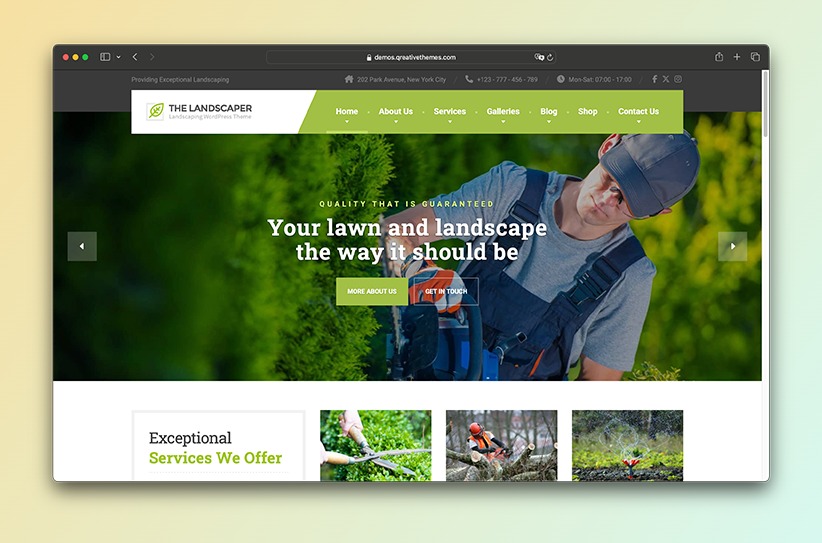
A Better Website for Your Landscaping Business
Show your services, project galleries, and estimate form with a WordPress theme built for landscaping companies.