

A busy physical therapy practice needs more than clinical skill. New patients must be able to find the practice, understand whether it treats their problem, trust the people behind it and book without unnecessary friction.
That journey rarely depends on one marketing channel. It usually combines local search, a clear website, professional referrals, patient recommendations and a reliable booking process.

TL;DR: Keep your Google Business Profile accurate, publish useful pages about the conditions and treatments you handle, show the clinicians behind the practice, make booking easy and maintain relationships with both patients and local healthcare professionals.
1. Make the practice easy to find in local search
Many prospective patients begin with Google, even when a friend or healthcare professional has already recommended a clinic. They may search for a practice name, a treatment, a symptom or a nearby provider.
Your website and Google Business Profile should give those searches a clear answer. For a closer look at this decision process, read how new patients find a physiotherapist online.
Keep your Google Business Profile complete
- Use the practice’s real name, address and telephone number.
- Choose the most accurate primary business category.
- List current opening hours and keep holiday hours updated.
- Add original photographs of the entrance, reception, treatment rooms and team.
- Link directly to the most useful booking or contact page.
- Reply professionally to reviews without discussing private health information.
Consistency matters. A patient who finds different hours, phone numbers or addresses on different websites may wonder whether the information is current.
Create pages around real patient questions
A single treatments page can introduce your services, but important treatments and conditions may need their own pages. Each page should explain who the service may suit, what an appointment involves, who provides it and how to book.
Write for people who may not know the clinical term for their problem. Use plain language alongside accurate professional terminology, and avoid promising a result that depends on assessment or individual circumstances.
Need a Website for Your Physical Therapy Clinic?
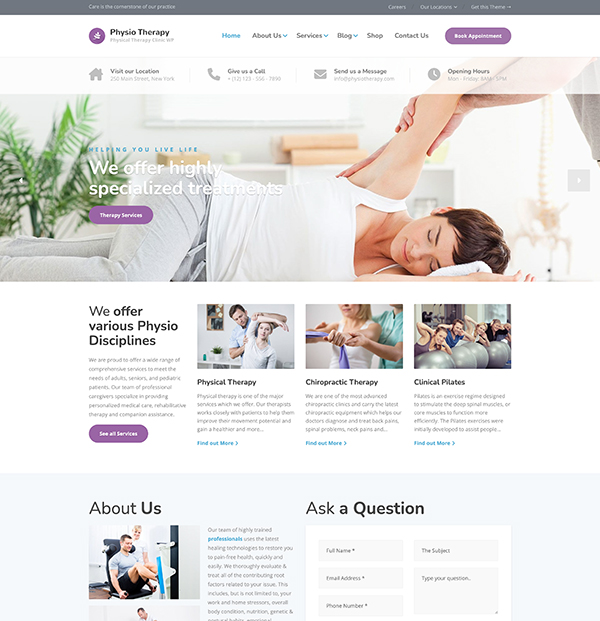
Physio includes ready-made treatment pages, therapist profiles, pricing sections, and online booking—so you don’t have to start from scratch.
2. Build trust before the first appointment
Healthcare decisions are personal. Prospective patients want evidence that the practice is legitimate, qualified and accustomed to treating people with concerns like theirs.
Show the people who provide care
A useful clinician profile includes a recent photograph, qualifications, registrations where relevant, clinical interests, languages spoken and a short explanation of the therapist’s approach. Specific information is more reassuring than a generic claim about compassionate care.
Use reviews carefully
Reviews can help a patient assess communication, punctuality and the overall experience. Ask for honest feedback without offering an incentive or suggesting what rating to leave. When replying, thank the reviewer without confirming that the person received treatment or revealing anything about their care.
Place selected testimonials near related services when you have the patient’s permission and local rules allow it. Check the advertising and testimonial requirements that apply to healthcare providers in your country.
Explain what happens next
Uncertainty stops some people from booking. Explain whether they need a referral, what to bring, how long the first appointment lasts, accessibility arrangements, payment options and what happens after they submit an enquiry.
3. Develop professional referral relationships
Referrals from general practitioners, consultants, sports clubs, personal trainers and other health professionals can be valuable when the relationship is clinically appropriate. The aim is to make your expertise and referral process easy to understand.
- Introduce the practice and its relevant areas of focus.
- Provide a concise referral route and current contact details.
- Explain which cases you commonly handle and when another provider may be more suitable.
- Communicate promptly and securely when patient consent and local rules permit it.
- Stay useful by sharing relevant updates rather than sending repeated sales messages.
A strong referral network develops through reliable patient care and professional communication. It cannot be replaced by a one-off promotional email.
4. Encourage patient recommendations respectfully
Satisfied patients may recommend the practice to family, friends or colleagues, but healthcare referrals require tact. A simple reminder that the practice welcomes new patients is usually enough. Avoid turning a clinical conversation into a sales pitch.
Keep the website address and booking details easy to share. Printed appointment cards, a clear email signature and an uncomplicated booking page all make a recommendation easier to act on.
Stay connected without overmarketing
Where consent and applicable privacy rules allow, useful emails about opening hours, new services or general self-management information can keep the practice familiar. Give recipients a clear way to unsubscribe and never use sensitive health information to segment marketing without an appropriate legal basis.
5. Remove friction from booking
A motivated patient can still abandon the process when they cannot find a phone number, the form asks for too much information or the next step is unclear.
- Keep a visible booking action on important pages.
- Offer a telephone option for people who want to ask a question first.
- Use a short, mobile-friendly form.
- Ask only for information needed at that stage.
- State when the patient should expect a response.
- Explain fees, insurance arrangements and cancellation terms clearly.
- Use secure systems for personal and health information.
Your homepage, treatment pages, clinician profiles and booking page should support the same decision. This guide to the pages a physical therapy website needs provides a practical structure.
Measure enquiries, then improve the weak point
Ask new patients how they found the practice and record the answer consistently. Website analytics, call tracking used with appropriate consent, booking data and referral-source information can show where enquiries begin and where people leave.
Review the basics each month: profile views, website visits, calls, completed forms, bookings and referral sources. These numbers do not explain everything, but they help you decide whether the next improvement belongs in visibility, trust or booking.
A practical starting plan
- Check the practice details shown on Google and the website.
- Rewrite the homepage so it clearly states the treatments, location and next step.
- Create or improve pages for the most important treatments and conditions.
- Publish complete profiles for every clinician.
- Test the booking journey on a phone.
- Introduce a respectful process for reviews and recommendations.
- Contact a small number of relevant local referral partners.
A Better Website for Your Physical Therapy Clinic
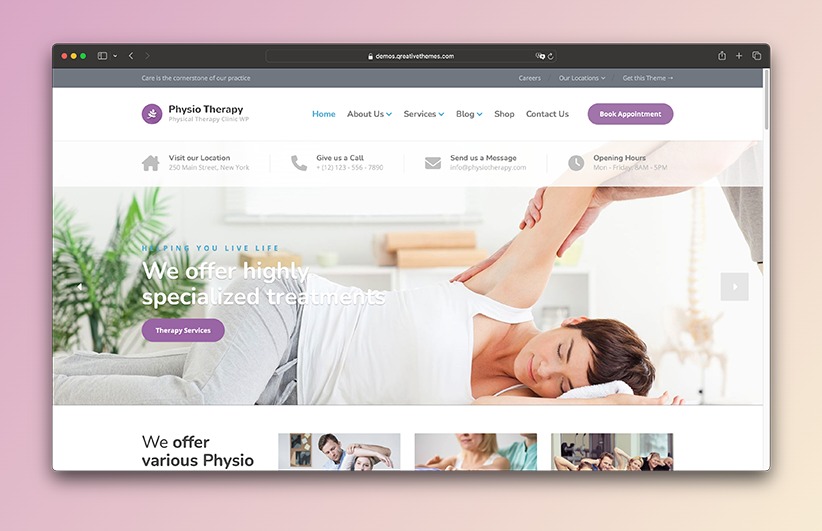
Present your treatments, therapist profiles, pricing, and online booking with a WordPress theme built for physical therapy clinics.