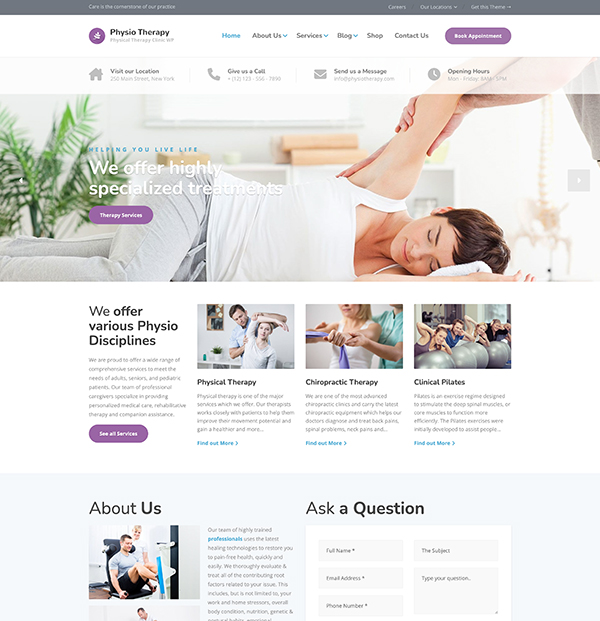

Someone searching for a physiotherapist is usually already in pain. They’re not browsing, they’re looking for someone they can trust, who’s available soon, and who can actually help. Your website has about five seconds to convince them that’s you.
Most physio websites either have too little or too much information. A basic homepage doesn’t convince patients, and long clinical descriptions usually get skipped.
In this guide I’ll walk you through every page a physical therapy website needs, what to put on each one, and how to make your site work as a genuine patient acquisition tool, not just an online business card.

1. Homepage: Reassure and Convert in Seconds
Someone landing on your physical therapy website is usually in pain, frustrated, or both. They want to know quickly: can you help me, are you nearby, and how do I get an appointment?
Your homepage needs to answer all three of those questions before the visitor has to scroll. Clarity beats cleverness every time on a healthcare website.
What to include on your homepage:
- A headline that says what you treat and where
- A prominent booking button or phone number above the fold
- A brief overview of your main treatment areas
- Trust signals: years of experience, qualifications, number of patients treated
- A few patient reviews or star rating
- A reassuring, approachable photo of you or your clinic
Headline examples (weak vs strong):
❌ Weak: Welcome to PhysioPlus — Professional Physical Therapy Services
✅ Strong: Expert Physiotherapy in Amsterdam — Back Pain, Sports Injuries & More
❌ Weak: We help patients recover and return to the activities they love
✅ Strong: Back in action faster. Physiotherapy in Amsterdam with same-week appointments.
Avoid clinical language on your homepage. Your patients aren’t searching for “musculoskeletal rehabilitation” — they’re searching for “back pain physio near me.” Write for the person, not the profession.
2. Treatments Page: Show What You Can Help With
A clear treatments page tells patients whether you can help with their specific problem, and it’s one of the best pages on your site for SEO, because people search by treatment and condition, not by your clinic name.
Rather than listing every treatment modality in clinical terms, focus on what problems you solve. People search for their symptom, not the treatment technique.
Common treatments to list:
- Back and neck pain
- Sports injuries and rehabilitation
- Post-surgery recovery
- Knee and hip pain
- Shoulder and rotator cuff injuries
- Headaches and migraines
- Workplace and posture-related pain
- Women’s health physiotherapy
- Dry needling and manual therapy
If you specialize in specific areas: sports rehab, post-surgical recovery, pediatric physio, give those their own dedicated pages. A standalone “Sports Injury Physiotherapy Amsterdam” page will rank far better than a bullet point in a list.
Frame your treatments around outcomes, not techniques. “Get back to running after a knee injury” is more compelling to a patient than “patellofemoral rehabilitation protocol.”
3. About Page: The Most Important Trust Page on Your Site
Physical therapy is deeply personal. Patients are often in pain, sometimes anxious, and they’re choosing someone to put their hands on their body. Your about page is where you earn that trust before they’ve even walked through the door.
This matters more in healthcare than almost any other industry. A warm, genuine about page can be the difference between a patient booking with you or going to the clinic down the road.
What to include:
- Your qualifications and registration, patients need to know you’re legitimate
- Your specialisms and areas of clinical interest
- Your story: why you became a physio, what drives your practice
- A professional but approachable photo, smiling matters
- Your clinic environment: a photo of your treatment room helps anxious new patients
- Your team if you have one
Tone examples (weak vs strong):
❌ Weak: Our clinic provides evidence-based physiotherapy interventions delivered by qualified practitioners.
✅ Strong: I became a physiotherapist because I tore my ACL at 19 and spent six months in rehab. My physio changed everything. Now I get to do that for other people.
If you have multiple therapists, give each one their own short bio with photo. Patients often choose a therapist, not just a clinic. Making your team visible and human increases bookings significantly.
The Physio WordPress theme includes an About Us page with a built-in team section and individual therapist profile pages, so new patients can find the person they’re booking with before they even arrive.
4. Conditions Page: Your Biggest SEO Opportunity
This is the page most physio websites skip, and it’s one of the most valuable for getting found on Google.
Patients don’t search for “physiotherapy”. They search for their problem: “back pain physio Amsterdam”, “physio for sciatica” or “sports injury treatment Chicago.” A page for each condition puts you right where they’re looking.
High-value conditions to cover:
- Lower back pain
- Sciatica
- Neck pain and whiplash
- Frozen shoulder
- Tennis and golfer’s elbow
- Knee ligament injuries (ACL, MCL)
- Plantar fasciitis
- Hip pain and bursitis
- Headaches and cervicogenic pain
Each condition page should explain what it is in plain language, how you treat it, what the recovery looks like, and end with a booking call-to-action. Written well, these pages rank for condition-specific searches and bring in patients who are actively looking for help with exactly what you treat.
Write condition pages for the patient, not for other clinicians. Avoid jargon, use the words patients actually search for, and always end with a clear next step: book an appointment, call us, or send a message.
5. Reviews / Testimonials Page: Let Patients Sell For You
Healthcare decisions are among the most trust-dependent purchases people make. Reviews matter more for a physio clinic than almost any other type of business.
A dedicated reviews page, or prominent testimonials throughout your site, gives nervous new patients the reassurance they need. Seeing that someone with the same problem as them got better at your clinic is enormously powerful.
What makes a physio review convincing:
- Condition-specific details: “I came in with chronic lower back pain and was back at the gym in 6 weeks” beats “great service”
- Real names: anonymous reviews carry less weight in healthcare
- Variety of conditions: shows your range
- Star ratings: embed your Google reviews if possible for credibility
Don’t just collect reviews, categorize them. A patient searching for a knee injury specialist is much more persuaded by a review from another knee patient than a generic five-star rating.
6. Booking / Contact Page: Make the Next Step Effortless
This is the most important page on your website. Every other page exists to get people here, and the easier you make it to book, the more appointments you fill.
For a physio practice, online booking is increasingly expected. If you can offer it, it will convert significantly better than a contact form alone. Many patients prefer booking outside of business hours.
What to include:
- Online booking system if possible — this is the gold standard
- Your phone number, large and tap-to-call on mobile
- A simple contact form for people who prefer it
- Your clinic address with a map embed
- Opening hours — patients need to know when you’re available
- Parking and access information — reduces anxiety for first-time visitors
- What to expect at a first appointment — a short paragraph helps nervous patients
Booking friction (weak vs strong):
❌ Weak: A contact form asking for condition, duration of symptoms, previous treatment history, GP details, and insurance information before confirming an appointment.
✅ Strong: Name, phone number, preferred appointment time, and a brief description of the problem. Handle the clinical intake at the appointment.
Add a “What happens next” note after the booking form: “We’ll call you within 2 hours to confirm your appointment.” Reducing uncertainty after someone submits a form increases the chance they don’t call a competitor in the meantime.
Optional Pages Worth Adding
Once your core pages are in place, these extra pages can help convert more visitors and improve your search rankings:
FAQ Page
“Do I need a GP referral?” “Is physiotherapy covered by my insurance?” “What should I wear?” “How many sessions will I need?” These are the questions every new patient has. Answering them on your website saves you time on the phone and removes the last hesitation before booking.
Blog
Exercise guides, injury prevention tips, advice for common conditions, return-to-sport guidance. A blog builds your authority in local search over time and attracts patients at the early stages of managing a problem — before they’ve decided they need a physio. Being the helpful expert they find first puts you front of mind when they’re ready to book.
Pricing Page
Physio pricing is a common search. Being transparent about your session costs removes a barrier for self-paying patients and filters out people outside your price range before they call. If you work with insurance providers, list them clearly, it’s a significant factor in a patient’s decision.
A Note on SEO for Physical Therapy Websites
Most new patients find a physio by searching Google. Getting your pages right is what determines whether they find you or your competitor. A quick checklist:
- Include your town or city name in your page title, first paragraph, and at least one heading on every page
- Write a unique meta description for every page, especially condition pages
- Add alt text to every image, including clinic and team photos
- Get your clinic listed on Google Business Profile, essential for local search
- Ask every discharged patient for a Google review, they directly affect your local ranking
- Make sure your phone number is real text, not embedded in an image
The physio clinics that rank well locally aren’t doing anything complicated. They have clear pages, consistent local information, and genuine patient reviews. That’s the foundation.
Now Go Build It
You don’t need a complicated website. You need a clear one. Get these core pages right and you’ll have a site that brings in new patients consistently — then build from there when you’re ready.
Your Physical Therapy
Website, Ready in a Weekend
Every page from this guide, already built. Just add your content and go live.