
Growing a physical therapy practice is different from growing most other businesses. Your patients aren’t buying a product or booking a one-off service, they’re making a decision about their health, often when they’re in pain and anxious.
Trust matters more here than in almost any other field. And yet many physio practices treat their marketing like a plumbing company, just getting found is enough.
This guide covers the most effective ways to get more patients for your physical therapy practice, from your online presence to referral networks to the experience that turns a first-time patient into someone who recommends you to everyone they know.

1. Be Found When Someone Is Searching for Help
Most people looking for a physiotherapist search Google when they’re already in pain or discomfort. They’re not doing casual research, they’re looking for someone who can help them, available soon, who they can trust. Showing up at that moment is everything.
Google Business Profile:
When someone searches “physiotherapist Amsterdam” or “physio near me”, the first thing they usually see is a map showing three local practices. Appearing in that map pack is one of the highest-impact ways to attract new patients.
Completing your Google Business Profile properly, with photos, accurate service descriptions, and strong reviews, is often enough to outrank most competitors in your area.
- Fill in every field: treatments offered, opening hours, website, phone number
- Add photos of your clinic, treatment rooms, and team. It reduces first-appointment anxiety significantly
- Collect reviews consistently, more on this below
- Post an update monthly: a tip, a new service, or a patient success story
Your website, the trust-building hub:
For a physiotherapy practice, your website carries much more of the trust-building burden than it does for most other businesses. When someone is about to book their first appointment, they want to know who they’ll be seeing, what you specialize in, and whether you seem like someone they’d feel comfortable with. If the site feels cold or impersonal, they’ll simply keep looking.
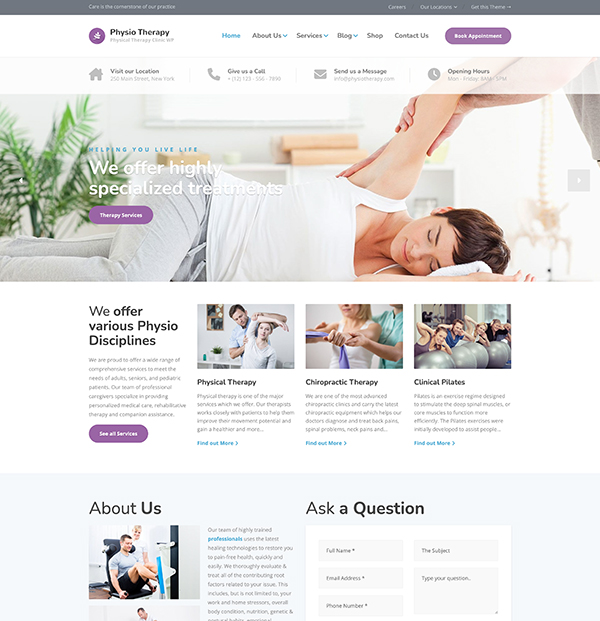
The Physio WordPress theme is built specifically for this, with a structure that puts your team, treatments, and patient reviews front and centre, exactly where new patients are looking for them.
Rank for condition-specific searches:
People don’t just search “physiotherapist“, they search “back pain physio Amsterdam,” “sports injury rehab Rome,” or “knee pain treatment Berlin“.
Dedicated pages for each condition or treatment you offer help you show up for those specific searches, which are higher intent than a generic brand search.
Each treatment page should explain the condition in plain language, describe how you approach it, and give patients a realistic sense of what to expect. Written for the patient, not for other clinicians.
Use Google Search Console to see what people search for before visiting your website. It often reveals condition-specific searches you may have missed and shows which pages are already bringing in visitors.
2. Build Trust Before the First Appointment
Choosing a physiotherapist is a deeply personal decision. Patients are in pain and placing themselves in a vulnerable position with someone they’ve never met. Your online presence should ease their worries before they even step inside.
Reviews, your most powerful trust signal:
When a physiotherapy practice has 50 genuine Google Reviews and a 4.9 rating, it often wins the trust of new patients who have never heard of the practice before. The reviews answer the questions many people quietly wonder about: Is this person good at what they do? Will they listen to me? Will I feel comfortable?
❌ Weak: Five-star reviews with no text — just a star rating and a name.
✅ Strong: “I came in with chronic lower back pain I’d had for two years. Three sessions in I was back to running. The explanation of what was actually causing the pain made everything click.” — Peter, Dublin
The difference is specificity. Specific reviews answer the exact questions new patients are asking. When asking for reviews, a gentle nudge helps: “It would really help if you could mention what you came in for and how things improved, it helps other patients in the same situation find us.”
Your team page:
People booking their first appointment often choose a specific therapist, not just a clinic. A team page with genuine photos, rather than stiff headshots, and short personal bios explaining why each therapist chose physiotherapy can significantly improve conversion rates. People book with people, not clinics.
Before and after your website, the full patient journey:
The patient experience starts long before the appointment. A confirmation email introducing the therapist and outlining what to expect can reduce no-shows and ease first-appointment anxiety. Following up with a reminder the day before, along with parking and access details, shows professionalism and care.
Add a short “What to expect at your first appointment” section to your website. It answers the question every new patient has but rarely asks, removes a common barrier to booking, and positions you as a practice that thinks about the patient experience.
3. Get More Referrals From Healthcare Professionals
GP referrals and recommendations from other healthcare professionals are one of the most consistent sources of new patients for physiotherapy practices, and one of the most underinvested. A single GP who regularly recommends you can send more patients your way than months of online marketing.
Who to build relationships with:
- GPs and general practitioners, the most direct referral source
- Sports coaches and personal trainers, they regularly work with people who need physical therapy
- Orthopedic surgeons and consultants, post-operative rehabilitation referrals
- Occupational health providers, workplace injury referrals
- Pilates and yoga instructors, they often see clients with chronic pain or movement issues
How to approach it:
This isn’t about cold calling, it’s about being a practitioner that other professionals trust and want to recommend. Start with a short introduction letter or email explaining your specialisms and referral process. Then, after treating a referred patient (with consent), follow up with a brief summary letter to show you value the relationship.
- Be clear about your specialisms and what kinds of patients you’re best placed to help
- Make the referral process easy, a dedicated referral form or email address helps
- Respond quickly to referred patients, it reflects well on the professional who recommended you
- Keep referring professionals updated on patient progress where appropriate
Having a short, professionally printed card that summarises your specialisms, contact details, and referral process can be valuable when introducing yourself in person. It’s a small investment that reinforces a professional image.
4. Turn Existing Patients Into Your Best Marketing Channel
Unlike many service businesses, physiotherapy naturally creates opportunities for repeat visits and word-of-mouth referrals. When someone recovers well under your care, they’re not only likely to come back in the future, they’re also likely to recommend you to others.
Encourage referrals naturally
Most happy patients would gladly recommend you. The reason they often don’t is simply that it never crosses their mind.
A short mention at the end of treatment works well:
“If you know anyone dealing with something similar, feel free to send them our way.”
It doesn’t feel pushy, it just makes the option clear.
Maintenance and wellness appointments
Many patients who come in with an acute injury benefit from occasional maintenance appointments even after the original issue has resolved.
A short message a few months after discharge works well:
“Just checking in, and a reminder that we’re here if anything flares up or if you’d like a maintenance session.”
It’s a low-pressure way to stay in touch and often leads to a booked appointment.
Group classes and workshops
If your practice has the space, small group sessions, back care classes, posture workshops, injury prevention for runners, serve multiple purposes at once. They generate revenue from existing patients, attract new patients who prefer a lower-commitment first step, and position your practice as an educational resource in the community.
Send a simple patient newsletter every quarter. Include a practical exercise tip, a seasonal health topic and a short update from the practice. This keeps you top of mind with past patients and often prompts people to book a follow-up or refer someone they know.
5. Make Booking as Easy as Possible
Once someone has decided they want to see a physiotherapist, booking should be effortless. If it isn’t, many will simply move on to the next clinic.
Friction like unanswered contact forms, a phone number that goes to voicemail, or the absence of online booking quietly costs practices a significant number of new patients every month.
Online booking:
Many patients, especially younger patients and those booking outside office hours, strongly prefer to book online rather than call. If you do not offer online booking yet, it is one of the highest-impact improvements you can make to increase your new patient conversion rate.
❌ Weak: A contact form with no indication of availability or response time, and a phone number that goes to a generic voicemail.
✅ Strong: An online booking calendar showing real availability, a phone number answered during clinic hours, and an auto-response confirming enquiries with an expected response time.
Reduce barriers at every step:
- Show your availability window on your website. “Appointments available within 3 days” reassures patients.
- Make your phone number tap-to-call on mobile. Most patients book from their phone.
- Confirm every booking immediately. Uncertainty about whether a booking went through is a common source of anxiety.
- Send a reminder 24 hours before the appointment. It significantly reduces no-shows.
Make it a habit to ask new patients how they found you. You can ask during the first appointment or add the question to your intake form. After a few months, you will have a clear picture of which channels are sending you the most patients.
Now Go Get More Patients
Growing a physiotherapy practice comes down to being findable, being trustworthy, and delivering an experience good enough that patients tell their friends. Get those three things right and the rest follows.
Your Physical Therapy
Website, Ready in a Weekend
Built specifically for physiotherapy practices. Professional, fast, and ready to start attracting new patients.