
Ask most landscapers what stops them from getting more Google reviews and they’ll say the same thing, it feels awkward to ask. You’ve just spent two days in someone’s garden, done a great job, they’ve thanked you warmly, and then you have to ask them to go online and write something about it. It feels like you’re cashing in on the goodwill.
Here’s the thing, most happy customers are genuinely glad to help. They just need to be asked, and they need it to be easy. This guide covers why reviews matter so much for landscaping businesses specifically, how to ask for them without it feeling awkward, and how to turn your reviews into a consistent stream of new enquiries.
1. Why Reviews Matter More for Landscaping Than You Might Think
When someone hires a landscaper, they’re not just buying a service, they’re letting a team of people into their garden, often for days at a time. That requires a level of trust that most purchases don’t. And trust, for most people, comes from other people’s experiences.
Think about how you make decisions when hiring someone for your own home. You ask friends, check reviews, look for evidence that other people have had a good experience. Your potential customers are doing exactly the same thing, and if they can’t find that evidence for your business, they’ll find it for a competitor.
The numbers that matter:
- Most people read at least three to five reviews before deciding to contact a business
- A business with 30+ reviews is perceived as significantly more trustworthy than one with five
- The average star rating affects click-through rates from Google, a 4.8 gets more clicks than a 4.2
- Specific reviews mentioning the type of work attract more relevant enquiries
Beyond trust, reviews directly affect your Google rankings. Your Google Business Profile ranking is influenced by the number and quality of your reviews, which means more reviews leads to better visibility, which leads to more enquiries, which leads to more opportunities to get more reviews. It’s a compounding effect that the landscaping businesses ignoring reviews are missing out on entirely.
Don’t just aim for a high star rating, aim for a high review count. A business with 60 reviews at 4.7 stars will almost always outperform one with 12 reviews at 5.0 stars, both in Google rankings and in customer trust.
2. How to Ask for Reviews Without It Feeling Awkward
The awkwardness most landscapers feel about asking for reviews comes from how they imagine asking, a sheepish mention at the end of the job while the customer is distracted, or a formal email that feels transactional. Neither works well. The key is timing, framing, and making it as easy as possible.
When to ask:
The best moment is right after the customer sees the finished result for the first time, when they’re standing in their transformed garden and the delight is fresh. That’s your window. A natural, genuine ask at that moment lands completely differently than a follow-up message three weeks later.
For ongoing maintenance customers, the best time is after you’ve done something particularly noticeable, a big seasonal tidy-up, a new planting scheme, a tricky job they were worried about.
How to ask:
❌ Weak: “If you get a chance, it would be great if you could leave us a review somewhere.”
✅ Strong: “Really glad you’re happy with how it turned out. Would you mind leaving us a Google review? It genuinely helps us a lot, here’s the direct link so it only takes a minute.”
The key difference is specificity and ease. Ask for a Google review specifically, not just a review “somewhere online.” Share a direct link instead of telling people to “find us on Google.” And include a genuine reason, such as that it truly helps our business, rather than making a vague request.
Text message vs email:
A text message sent the day after the job is completed consistently outperforms email for review requests. It’s personal, it’s easy to respond to, and the direct link is one tap away. Keep it short and write it the way you’d actually text someone, not like a corporate follow-up.
❌ Weak: Dear customer, thank you for choosing us. We would appreciate it if you could take a moment to share your experience online.
✅ Strong: Hi [name], hope you’re enjoying the garden! If you have two minutes, a Google review would really help us out, here’s the link: [link]. Thanks, [your name]
Create the direct link to your Google review page once and save it somewhere easy to access. Your phone’s notes app or a saved text message draft. That way asking for a review is literally a 30-second job after every completed project.
3. What Makes a Landscaping Review Actually Useful
Not all reviews are equal. A five-star rating with no text is better than nothing, but a specific, detailed review is worth five generic ones. Both for convincing new customers and for Google rankings.
What a useful landscaping review includes:
- The type of work: garden design, lawn maintenance, hard landscaping, tree work
- A specific result: “completely transformed our overgrown back garden” is far more useful than “great job”
- Something about the experience: reliability, communication, tidiness, problem-solving
- The location: helps with local SEO and reassures nearby customers
How to encourage more specific reviews:
You can’t tell customers what to write, but you can give them a gentle steer. When asking for a review, a brief framing helps: “It would really help if you could mention what we did and how it turned out. It helps other customers in the same situation find us.”
That one sentence consistently produces more detailed, useful reviews without putting words in anyone’s mouth.
Screenshot your best reviews and share them on social media (with the customer’s permission). It amplifies the review beyond Google, shows your audience that real people recommend you, and often prompts other customers to leave their own review when they see you sharing them.
4. How to Respond to Reviews, and Why It Matters
Most landscaping businesses don’t respond to their Google reviews at all. That’s a missed opportunity. Both for SEO and for the impression it makes on potential customers reading your profile.
Responding to positive reviews:
A brief, personal response to a positive review shows that there’s a real person behind the business who appreciates the feedback. It doesn’t need to be long, two sentences is enough. Mention something specific from the review to show you actually read it.
❌ Weak: “Thank you for your review! We appreciate your business.”
✅ Strong: “Really glad the garden redesign turned out the way you hoped, that tricky corner was a fun challenge to work with. Hope you get plenty of use out of it this summer!”
Responding to negative reviews:
A negative review handled well is often more convincing to potential customers than a dozen positive ones. It shows you’re accountable, you take problems seriously, and you’re easy to deal with when things go wrong.
- Respond calmly and without defensiveness even if the review feels unfair
- Acknowledge the issue specifically, not generically
- Offer to resolve it offline: include your contact details or ask them to get in touch
- Never argue publicly. It always reflects worse on you than on the reviewer
If you receive a negative review you believe is genuine, reach out to the customer privately to resolve it. A customer who feels heard and whose issue was addressed sometimes updates their review, but never ask them to change it directly, just focus on resolving the problem.
5. Build Reviews Into Your Business Routine
The landscaping businesses with the most reviews aren’t doing anything special, they’ve just made asking a habit rather than an afterthought. A few simple systems make the difference between occasionally getting reviews and consistently getting them.
Simple systems that work:
- Save your Google review link as a quick-access note on your phone
- Add a review request to your standard job completion checklist
- Include a QR code linking to your Google review page on your invoice or a small leave-behind card
- Set a monthly reminder to check your reviews and respond to any new ones
- Track your review count: watching it grow is genuinely motivating
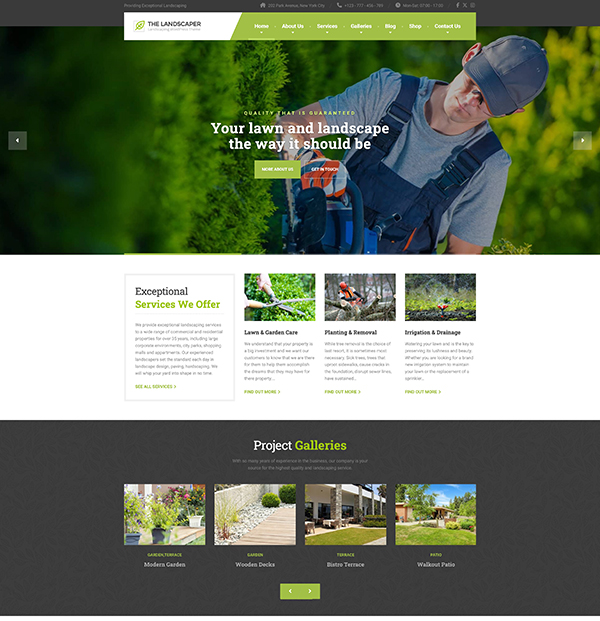
If you’re starting from scratch or want to make your review profile work harder, make sure your website is set up to showcase them properly too. The Landscaper WordPress theme includes a dedicated reviews section that pulls your best testimonials front and centre. So every visitor to your site sees the social proof they need to get in touch.
Don’t ask for reviews in bulk. Sending ten review requests on the same day looks suspicious to Google and can trigger a filter that hides some of them. A steady trickle of one or two reviews per week is far better than occasional bursts.
Start Asking
The landscaping businesses with the most reviews aren’t the ones doing the best work, they’re the ones who ask consistently. Start after your next completed job and don’t stop.
Your Landscaping Website, Ready in a Weekend
Built specifically for landscaping businesses. Professional, fast, and ready to start winning you customers.