
Landscaping is one of those businesses where the quality of your work should speak for itself, and yet plenty of excellent landscapers struggle to fill their calendar while average competitors stay booked solid. The difference is almost never the quality of the work. It’s how visible they are, and how easy they make it for the right customers to find and choose them.
This guide covers the most effective ways to get more landscaping customers, from your online presence to seasonal strategy to the referral networks that can keep your calendar full year-round.
1. Let Your Work Do the Talking Online
Landscaping is one of the most visual trades there is. A before/after photo of a transformed garden sells your services better than any amount of carefully written copy. The businesses that grow fastest are usually the ones that document every job and make those results easy to find online.
Build a portfolio that converts:
- Photograph every job, before, during, and after
- Use natural light and take photos when the garden looks its best
- Show a range of project types and budgets, not just your most impressive work
- Add brief descriptions: what the brief was, what you did, how long it took
- Include the location: it helps with local SEO and reassures nearby customers
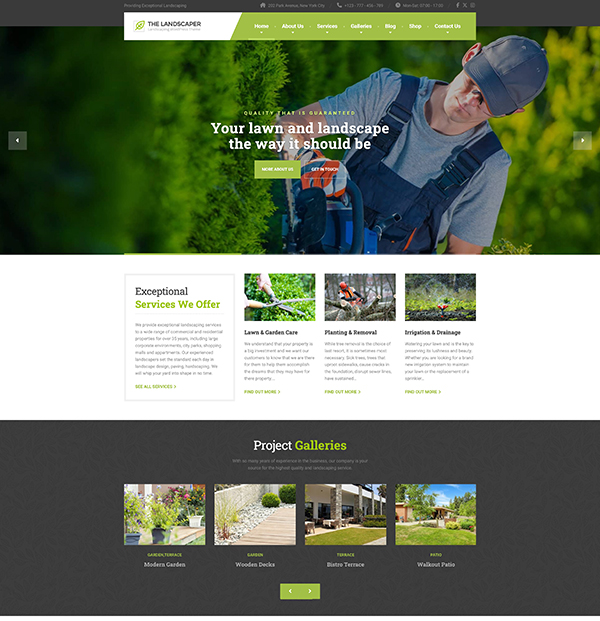
Your website is where these photos should live. If you don’t have a portfolio page yet, The Landscaper WordPress theme includes a dedicated project gallery built specifically for this, so you can start showcasing your work properly without building anything from scratch.
Social media as a visual showreel:
Instagram and Facebook are well-suited to landscaping because the content is naturally engaging, including garden transformations, seasonal before-and-afters, and work in progress. You don’t need a polished social media strategy. A photo of a finished garden posted the day you complete the job, with a brief caption and your location tagged, is enough to build a following of local homeowners over time.
- Post consistently rather than perfectly, once or twice a week beats sporadic bursts
- Tag your location on every post, it helps local people find you
- Before/after posts consistently get the most engagement, make them a habit
- Reply to every comment and DM, it signals that you’re approachable and responsive
Ask customers if you can take photos before you leave the job. Most are delighted, they want to show off their new garden too. Some will even share your post themselves, which puts you in front of their entire local network for free.
2. Show Up When People Are Searching
Most people looking for a landscaper search Google first. “Landscaper Amsterdam,” “garden design Chicago,” “hedge trimming near me”, these are high-intent searches from people who are ready to hire someone. Showing up for those searches is one of the highest-value things you can do for your business.
Google Business Profile:
Your Google Business Profile is what puts you on the map when someone searches for a landscaper in your area. A fully completed profile with photos of your work, accurate service descriptions, and a steady stream of reviews will outrank most local competitors, even larger companies that have neglected their profile.
- Fill in every field, services, service area, hours, website
- Upload at least 10–15 photos of completed projects
- Post an update at least once a month, a recent project photo takes five minutes
- Respond to every review, positive and negative
Your website and local SEO:
Beyond your Google profile, your website needs to clearly signal where you operate and what you do. Include your city and region naturally in your page titles, headings, and body text. If you serve multiple areas, consider a dedicated page per location, a “Garden Design Barcelona” page will rank for Barcelona searches far better than a generic homepage.
Check your Google Business Profile insights monthly, it shows you how many people searched for you, what they searched for, and whether they called or visited your website. It takes two minutes and tells you exactly what’s working.
3. Build a Referral Engine That Runs Itself
Word of mouth is how most landscaping businesses grow, and for good reason. A recommendation from a neighbour who just had their garden transformed carries more weight than any advertisement. The businesses that grow consistently are the ones that actively build this into how they operate rather than leaving it to chance.
Ask every satisfied customer:
Most happy customers would gladly recommend you, they just never think to do it unless you ask. A natural mention at the end of a job goes a long way: “If any of your neighbours ask about the garden, we’d love the recommendation.” It’s not pushy, it’s just making it easy for them to do something they were already inclined to do.
Google reviews, word of mouth that works around the clock:
A Google review is a recommendation that every future customer in your area can see. A landscaping company with 40 genuine reviews and a 4.8 rating will win enquiries from people who have never heard of them, purely because the reviews do the convincing.
❌ Weak: Hi, hope you’re enjoying the garden. If you get a chance, a review would be great.
✅ Strong: Hi [name], really glad you’re happy with how it turned out! If you have two minutes, a Google review would genuinely help us out, here’s the direct link: [link]. Thanks, [your name]
Build relationships with the right referral partners:
- Garden centers: Customers buying plants are often planning a garden project
- Estate agents: People buying new homes frequently want garden work done
- Garden designers: If you focus on maintenance or hard landscaping, designers who don’t offer those services will refer you
- Builders and developers: new builds often need landscaping
- Neighbours of your existing customers: a transformed garden is visible to everyone on the street
After completing a garden transformation, put a small sign in the garden for a few weeks, just your business name, phone number, and website. Neighbours notice a newly landscaped garden and the sign catches them at exactly the right moment of curiosity.
4. Win More Work From the Customers You Already Have
Unlike a moving company, a landscaping business has genuine repeat customer potential. A customer who hires you to redesign their garden is also a potential maintenance customer for years to come. Most landscaping businesses underinvest in this and leave significant revenue on the table.
Offer maintenance contracts:
A recurring maintenance contract, monthly visits, seasonal tidy-ups, lawn care, is the most reliable revenue a landscaping business can have. It fills quiet weeks in your calendar, reduces the pressure to constantly find new customers, and deepens your relationship with existing ones.
After completing a larger project, the natural moment to mention maintenance is at the handover. The customer is at peak satisfaction with their new garden, that’s the best possible time to suggest keeping it that way.
Seasonal upsells:
- Spring: planting, lawn treatment, irrigation setup
- Summer: ongoing maintenance, additional planting, water features
- Autumn: pruning, leaf clearance, winterising plants
- Winter: planning next year’s projects, structural work, hard landscaping
Customers who already trust you are far more likely to say yes to additional work than a cold enquiry. A simple message at the start of each season: “spring is a great time to think about X, let me know if you’d like us to take a look”, costs almost nothing and regularly converts into paid work.
Keep a simple record of every customer’s garden, what you planted, what work was done, any issues to watch. It makes your seasonal follow-ups feel personal and knowledgeable rather than generic, and customers notice the difference.
5. Make the Most of Busy Season, and Prepare During the Quiet Months
Landscaping has a clear seasonal pattern. Spring and early summer are your busiest months, enquiries spike as people start spending time outside and notice what needs doing. Winter is typically quiet. Most landscaping businesses simply ride this wave. The smarter ones use the quiet months to set themselves up for a stronger busy season.
During quiet months:
- Update your website portfolio with photos from the past season
- Ask recent customers for Google reviews, they have more time to respond
- Plan and publish a blog post or two, content written in winter starts ranking by spring
- Reach out to referral partners, estate agents and garden centres have more time in January
- Follow up with past customers about spring projects
During busy season:
- Make sure your quote response time stays fast, enquiries go cold quickly in peak season
- Capture photos of every job for your portfolio and social media
- Ask for reviews while the job is fresh, don’t save it for later
- Start booking ahead, customers planning summer gardens often enquire in March
Create a simple “Spring Garden Checklist”, what to do in your garden in March and April, and offer it as a free download or blog post on your website. It attracts local homeowners who are starting to think about their garden, before they’ve chosen a landscaper, and keeps you top of mind when they’re ready to hire.
Now Go Fill Your Calendar
You don’t need a big marketing budget to grow a landscaping business. You need great work, documented well, shown to the right people at the right time. Do that consistently and the enquiries follow.
Your Landscaping Website, Ready in a Weekend
Built specifically for landscaping businesses. Professional, fast, and ready to start winning you customers.