
Moving is a service people only need a few times in their life, so most jobs are one-time transactions. That means the challenge isn’t just doing great work, but making sure the right people find you at the right moment.
That moment is predictable. Most people search for movers four to eight weeks before they move. If you show up where they’re looking with a trustworthy website and an easy way to request a quote, you’ll win more jobs.
This guide explains the most effective ways for a moving company to get more customers, from improving your online presence to generating referrals.

1. Show Up When People Are Actually Looking
Most people searching for a moving company have already decided they need one. They’re not browsing, they’re comparing options and about to make a decision. That makes search one of the highest-value customer acquisition channels for any moving company.
Google Business Profile:
Your Google Business Profile is what puts you on the map, literally. When someone searches “moving company Amsterdam,” the first results they see are usually three local businesses shown on a map. Getting into that map pack is the single highest-impact thing you can do to get more moving enquiries.
A fully completed profile with photos, accurate service descriptions, and a steady stream of reviews will outrank most local competitors. If you haven’t set this up yet, stop reading and do it first, it’s free and takes about an hour.
Your website:
Once someone finds you on Google, your website has about five seconds to convince them to stay. Most moving company websites lose customers at this point, not because the company is bad, but because the website is slow, vague, or makes it hard to get a quote.
- Your phone number should be visible without scrolling, on every page
- A quote request form should be one click away at all times
- Your service area should be clear, people want to know you actually cover their location
- Load time matters, a slow website loses you customers before they’ve even read a word
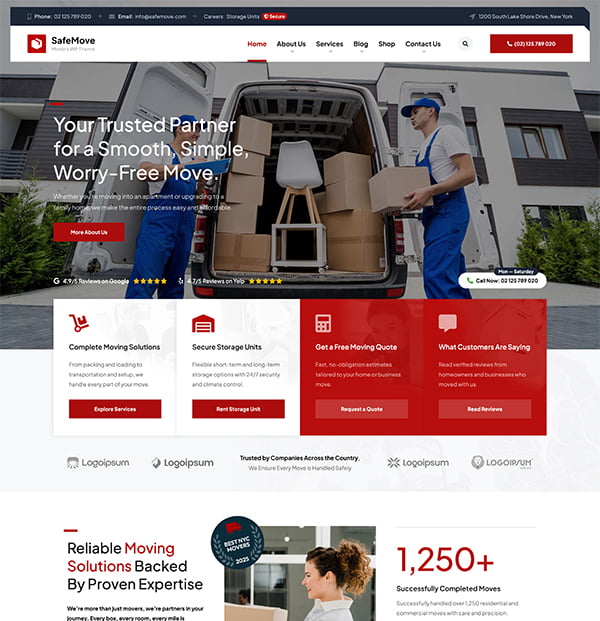
If your current website isn’t doing that job, the SafeMove theme is built specifically for moving companies with every page you need already in place.
Target the searches people actually make:
People don’t just search “moving company“, they search “moving company Amsterdam“, “movers for small apartment London” or “piano moving service New York“. The more specific your website and Google profile are about what you do and where you do it, the more of those specific searches you’ll show up for.
Check what searches are bringing people to your website using Google Search Console, it’s free and shows you exactly what people typed before landing on your site. You’ll often find keywords you hadn’t thought to target, and it tells you which pages are already working.
2. Turn Every Job Into Future Business
Moving is a word-of-mouth industry. People ask friends, family, and neighbours for recommendations before they Google anything. The moving companies that grow consistently are the ones that understand this and actively build it into how they operate.
Google reviews, your most powerful referral tool
Google reviews are word of mouth that never stops. When someone searches for a mover late at night and sees your 4.9 rating with 60 reviews next to a competitor’s 3.8 with 12, the decision is already made before they visit a website.
The companies with the most reviews aren’t necessarily the best movers, they’re just the ones who consistently ask. After every successful move, send a text message with a direct link to your Google review page. Keep it short and personal.
❌ Weak: Dear customer, we hope you enjoyed our service. If you have time, a review would be appreciated.
✅ Strong: Hi Sarah, glad the move went smoothly yesterday! If you have two minutes, a Google review really helps us out, here’s the link: [link]. Thanks, Mike
Ask for referrals directly
Most satisfied customers would happily refer you to someone, they just never think to do it unless you ask.
A simple line at the end of a job goes a long way: “If you know anyone else planning a move, we’d really appreciate the recommendation.”
You can also build referrals into your follow-up. A message two weeks after the move asking if everything arrived safely, with a natural mention that you’re always happy to help their friends and family, keeps you top of mind at exactly the moment people tend to tell others about their recent move.
The small things that get you recommended
People recommend moving companies for two reasons: the move went smoothly, and the team was easy to deal with. The second one is often underestimated. Being on time, communicating clearly, handling things carefully, and leaving the new place tidy are the things people mention in reviews and tell their friends about.
- Confirm the move the day before, it immediately sets you apart from companies that don’t
- Send a brief message when you’re on the way so the customer isn’t waiting anxiously
- Do a walkthrough at the end to make sure nothing was missed or damaged
- Follow up the next day: a simple “hope you’re settling in” message is memorable
Keep a simple log of every customer with their move date and contact details. A year later, when they might be moving again or know someone who is, a brief personal message costs you nothing and occasionally wins you a job with zero marketing spend.
3. Build Relationships That Send You Steady Referrals
The most consistent source of new customers for many moving companies isn’t Google, it’s a small number of referral partners who recommend them regularly. One good relationship with the right person can send you more business than months of advertising.
Who to build relationships with
- Estate agents and letting agencies, they deal with people moving constantly and need a reliable mover to recommend
- Mortgage brokers and financial advisors, they often know about moves before the customer has even started planning
- Property managers and landlords, rental turnovers mean regular moves
- Interior designers and home stagers, they work with people who are moving into new homes
- Storage facility operators: people using storage are often in the middle of a move
These aren’t cold sales calls, they’re conversations with people who have the same customers you want. Introduce yourself, explain what you do and what makes you reliable, and ask if they’d be comfortable recommending you when the occasion arises. Most will say yes if you come across as professional and easy to work with.
How to make referral partners want to recommend you
Referral partners recommend people they trust not to embarrass them. Every time someone takes their recommendation and has a good experience, the partner looks good. Every bad experience reflects on them. So what they’re actually looking for is a mover they can rely on, someone who shows up, communicates well, and doesn’t cause problems.
- Be easy to contact and quick to respond to enquiries they send your way
- Give their customers a small priority, faster response, a small discount
- Keep the partner in the loop when a customer they referred books with you
- Send a brief thank you when a referral turns into a job
Don’t try to build ten referral partnerships at once. Find two or three estate agents or letting agencies in your area, invest in those relationships properly, and let the results speak for themselves. Quality beats quantity every time.
4. Win More of the Enquiries You Already Get
Getting more customers isn’t only about generating more enquiries, it’s also about converting the ones you already receive. Most moving companies lose a surprising number of jobs not because of price, but because of slow response times or a quote process that feels uncertain.
Respond fast, very fast
When someone is comparing moving companies, they typically contact two or three at the same time. The first one to respond with a clear, professional reply often wins, not because they’re cheaper or better, but simply because they were there first.
Aim to respond to every enquiry within two hours during business hours. If you can’t always manage that, set up an automatic reply that acknowledges the enquiry and gives a realistic response time. It reassures the customer that their message was received and reduces the chance they move on to someone else.
❌ Weak: Responding to a quote request three days later with “Hi, thanks for your message, can you give us more details?”
✅ Strong: Responding within an hour with a brief confirmation, two or three clarifying questions, and an indication of your availability and rough pricing.
Make your quote process feel reliable
Moving is stressful. The people contacting you are anxious about one of the most disruptive events in their life. A quote process that feels clear, honest, and professional immediately differentiates you from companies that feel vague or unprofessional.
- Explain clearly what’s included in your quote and what’s not
- Give a realistic time estimate for the move, not just a price
- Be upfront about any factors that could affect the final cost
- Confirm everything in writing, even if you discussed it by phone
Follow up on quotes that didn’t convert
Most moving companies send a quote and wait. If the customer doesn’t respond, they assume they went elsewhere and move on. But people get busy, forget to reply, or are still deciding, a single follow-up message two or three days after sending a quote will win you jobs that would otherwise have gone to a competitor who happened to follow up first.
Track your quote-to-booking conversion rate. If you’re sending a lot of quotes but only converting a small percentage, the problem is likely response time, pricing, or how your quote is presented, not the quality of your work.
5. Use Quiet Periods to Build for Busier Ones
Moving has a clear seasonal pattern. Spring and summer are busy, people move when the weather is good and when families want to be settled before the new school year. January and February are typically slow. Most moving companies just accept this rhythm. The smarter ones use the quiet months to build the foundations that make the busy months even busier.
What to do in quiet periods:
- Update and improve your website: Fix anything that’s been bothering you, add new content, improve your quote form
- Ask recent customers for Google reviews: People are less rushed and more likely to respond
- Reach out to referral partners: Estate agents and letting agencies have more time in January too
- Write a blog post or two: Content published in quiet months starts ranking by the time busy season arrives
- Audit your Google Business Profile: Update photos, check your information is current, add any new services
Off-season promotions:
A modest discount for moves booked in January or February can help fill your calendar during slow months without significantly impacting your margins. Frame it positively (“more flexibility on dates, guaranteed availability”) rather than just cutting your price. People who move in winter often appreciate the extra availability and attention that comes with a quieter period.
Create a simple moving checklist: “8 Weeks Before Your Move” or “Moving Day Checklist”, and offer it as a free download on your website. It attracts people who are in the early planning stages, before they’ve chosen a mover, and keeps your company top of mind when they’re ready to book.
Now Go Get More Jobs
You don’t need a big marketing budget to grow a moving company. You need to show up where people are looking, make it easy for them to choose you, and do work good enough that people tell their friends. Get those three things right and the rest takes care of itself.
Your Moving Company Website, Ready in a Weekend
Built specifically for moving companies. Install, add your content, and start winning customers.