
WP Fastest Cache can reduce the work needed to serve repeat page requests. The safest configuration starts with page caching and adds optimization settings one at a time.
These are the baseline settings I use on straightforward WordPress sites, plus the options I test carefully because themes, hosts and plugins behave differently.
Quick Summary (Recommended Settings)
If you want the fastest and most reliable setup, use the settings below:
| Setting | Enable? |
|---|---|
| Cache System | ✅ |
| Preload | ✅ |
| Mobile | ✅ |
| Gzip | ✅ |
| Browser Caching | ✅ |
| Minify HTML | ✅ |
| Minify CSS | ✅ |
| Combine CSS | ❌ |
| Combine JS | ❌ |
What Is Caching (And Why It Matters)?
Normally, every time someone visits your website, WordPress runs PHP scripts, connects to the database, builds the page dynamically, and sends it to the visitor. This happens from scratch on every single page load.
A page-caching plugin stores generated HTML and can serve it without rebuilding the page for every eligible visit. That usually reduces PHP and database work. The result depends on the host, page type and existing cache layers.
Caching often makes the largest difference on uncached, mostly static pages. Measure the site before and after because there is no reliable percentage that applies to every host and page.
Step 1: Install WP Fastest Cache
Follow the steps below to install the WP Fastest Cache plugin from the WordPress plugin directory:

- Go to the Plugins → Add New
- In the search field enter “WP Fastest Cache”
- Click Install Now and wait
- When the Activate button appears, click it
Step 2: Recommended WP Fastest Cache Settings (Best Configuration)
Once installed, go to the WP Fastest Cache tab and enable the following settings.
This is a reasonable baseline for a conventional brochure site. Take a backup, change one group of settings at a time and test important pages after each change.
Core Settings
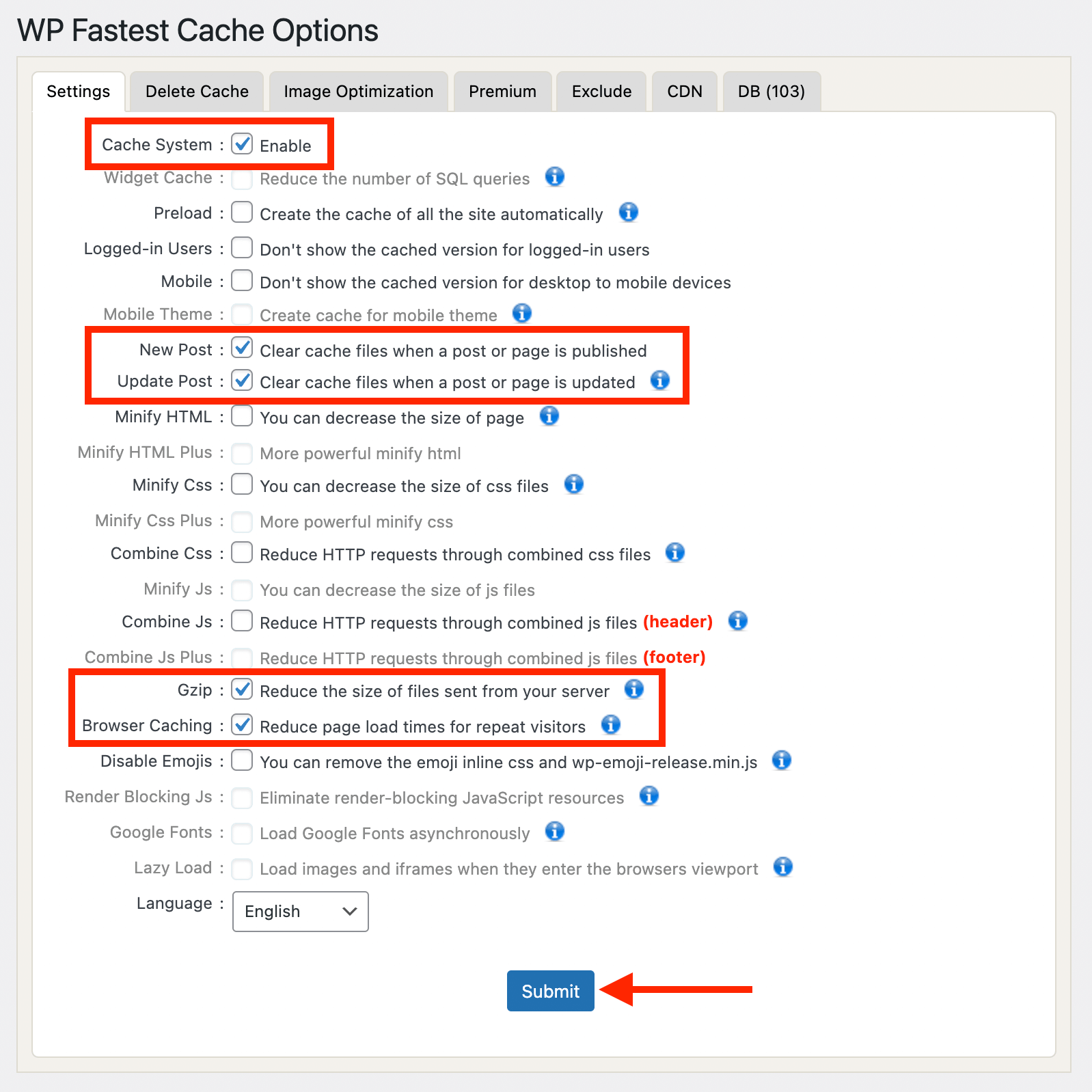
These settings cover the main caching behavior. Check whether your hosting provider already supplies full-page caching before enabling a second page-cache layer.
✅ Cache System – Enable (Required)
This is the core feature of the plugin and must be enabled for caching to work.
✅ Preload – Enable (Recommended)
Automatically generates cached pages in advance, so visitors are always served a fast-loading version of your site.
🟡 Mobile – Enable only when needed
A responsive site usually serves the same HTML to mobile and desktop visitors. Use a separate mobile cache only when the site generates different mobile content or the plugin’s current documentation requires it.
✅ Gzip – Enable (Recommended)
Compresses your website files before sending them to visitors, reducing page size and improving load speed.
✅ Browser Caching – Enable (Recommended)
Stores static files in users’ browsers so returning visitors experience significantly faster load times.
✅ New Post – Enable (Recommended)
Automatically clears the cache when you publish new content.
✅ Update Post – Enable (Recommended)
Clears cache when you update existing posts to ensure changes are visible.
Performance Optimization
These settings provide additional speed improvements but should be tested, as they can occasionally affect styling.
✅ Minify HTML – Enable (Recommended)
Removes unnecessary code from HTML files to reduce page size and improve speed.
✅ Minify CSS – Enable (Recommended, Test if Needed)
Compresses CSS files for better performance. Rarely causes issues, but test after enabling.
Settings to Use Carefully
🟡 Logged-in Users – Usually leave disabled
Logged-in sessions may contain personal or account-specific content. Only cache them when you understand the plugin’s behavior and have tested the relevant user roles.
Settings to Avoid
These options were more useful in older optimization setups but are less reliable with modern WordPress themes and plugins.
❌ Combine CSS – Disable (Not Recommended)
Can break layouts or styling, especially with modern themes and page builders.
❌ Combine JS – Disable (Not Recommended)
May cause JavaScript errors or conflicts with plugins.
Final Step (Important)
After applying settings:
- Click Submit to save changes
- Go to the Delete Cache tab
- Click Clear All Cache
This ensures your new settings take effect immediately.
If Something Breaks After Setup
If the layout, menus, forms or scripts break:
- Disable Combine CSS
- Disable Combine JS
- Clear all cache
- Retest in a private window and on a logged-out device
Step 3: Manually Clearing the Cache
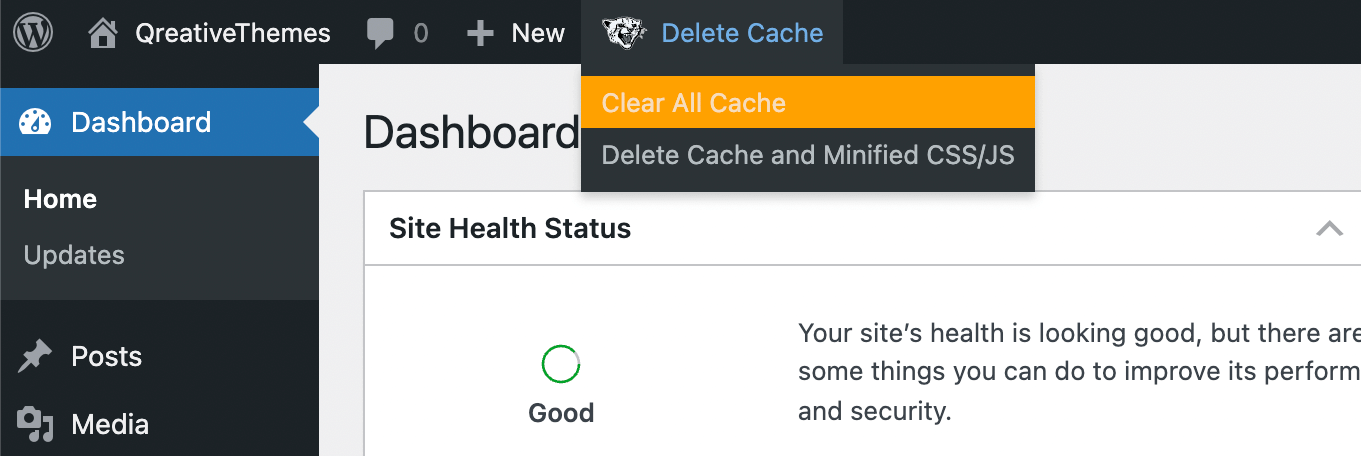
Sometimes you want to manually clear the cache of WP Fastest Cache, for example after theme and plugin updates.
To manually clear the cache:
- Hover over the admin bar at the top of your screen
- Click Clear All Cache
- Refresh your page
Does WP Fastest Cache Really Improve Speed?
It can. Page caching reduces server work for eligible requests and may lower Time to First Byte. Test an uncached first visit and a cached repeat request, since a CDN or host cache may already be doing the same job.
For the biggest combined impact, pair it with proper image compression. Our guide on how to compress images in WordPress explains how to resize, compress and deliver images in modern formats.
Caching is one of ten techniques covered in our complete guide to boosting page speed for your WordPress site.
Quick Setup Checklist (Recommended Configuration)
✅ Cache System → ON (required)
✅ Preload → ON
✅ Gzip → ON
✅ Browser Caching → ON
❌ Combine CSS → OFF
❌ Combine JS → OFF
Frequently Asked Questions
Is WP Fastest Cache free?
Yes. WP Fastest Cache has a free version that covers all the essential settings described in this guide, including caching, Gzip, and browser caching. A premium version is available with additional features like image optimisation and cache timeout rules, but the free version is sufficient for most small business sites.
Does WP Fastest Cache work with WooCommerce?
It can, but stores need careful testing. Cart, checkout and account pages contain dynamic or customer-specific information and should not be served from a shared page cache. Check the plugin’s current WooCommerce behavior and exclusion rules, then test the full purchase flow while logged in and logged out.
What’s the difference between WP Fastest Cache free and premium?
The free version includes page-caching features. Premium features and plan details can change, so compare the current feature list with what your host already provides before paying for overlapping tools.
Will WP Fastest Cache break my website?
It shouldn’t, but if your site looks broken after enabling it (missing styles, layout issues) the most common cause is the Combine CSS or Combine JS options conflicting with your theme or another plugin. Disable those two options first and the issue usually resolves immediately.
How often should I clear the cache?
Clear the relevant cache when an edit does not appear or after a change that affects generated pages. The plugin can purge cache when content changes, so routinely deleting the entire cache after every post edit is usually unnecessary.
Does caching affect SEO?
Caching may improve server response time and loading performance. Core Web Vitals are part of Google’s page-experience systems, but caching does not guarantee better rankings and TTFB itself is not a Core Web Vital.
Next step: Optimize your theme
Caching helps a lot, but your theme also affects speed. Choosing a lightweight, optimized theme can further improve performance.